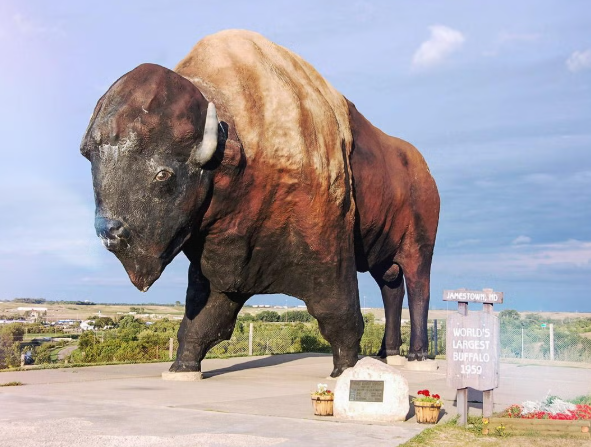
The allure of an American road trip lies not only in reaching your destination but also in the unexpected sights along the way. From giant sculptures and bizarre architecture to art installations made from abandoned cars, numerous roadside attractions are scattered across the United States. Some were built to attract tourists, some to commemorate local history, and others have gradually become symbols of road trip culture. The following are some representative attractions worth adding to your American road trip itinerary.
1. Cadillac Ranch: A Car Art Installation in Texas
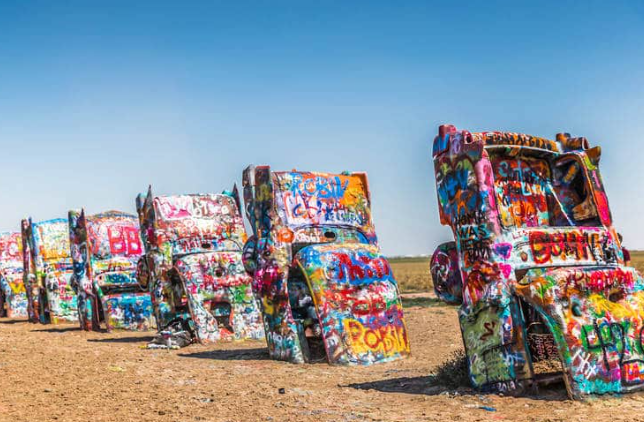
Located in Amarillo, Texas, Cadillac Ranch is one of America’s most famous roadside art installations.
This large-scale outdoor installation was created in 1974 by the art collective Ant Farm. Ten Cadillac cars from different years are angled upside down in the ground, their rear ends neatly protruding from the earth.
The cars are covered with colorful paint added by visitors, constantly changing the appearance of the artwork. It reflects both the development of the American auto industry and its close connection to 20th-century consumer culture.
Cadillac Ranch, near the historic Route 66, is a popular stop for many road trippers passing through Amarillo. Visitors can usually get up close to the cars and take photos showcasing the distinctive road trip culture.
2. Sam Houston Statue: A Giant Historical Statuary Along a Texas Highway
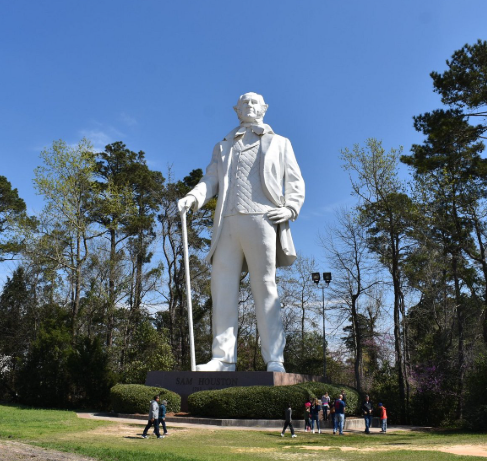
A tall, white statue stands out as you drive along Interstate 45 through Huntsville, Texas.
This sculpture, titled *A Tribute to Courage*, was created by artist David Adickes and completed in 1994. The main body of the statue is 67 feet tall, and with the granite base, the total height is approximately 77 feet.
The sculpture depicts Sam Houston, a historical figure from Texas who commanded the Texas army in the Battle of San Jacinto in 1836 and served as President of the Republic of Texas.
The statue depicts a figure wearing a long coat, one hand outstretched, standing upright. Its enormous size makes it a recognizable highway landmark in Huntsville.
The United States has many other examples of commemorating historical figures with large sculptures. Besides the giant statue in Huntsville, various forms of Sam Houston Statue exist throughout Texas, including equestrian statues, busts, and other historical monuments.
For travelers who appreciate history, culture, and distinctive sculptures, these sites offer both a convenient stopover and an opportunity to learn about local historical figures.
3. World’s Largest Ball of Twine: A Giant Rope Ball in Kansas
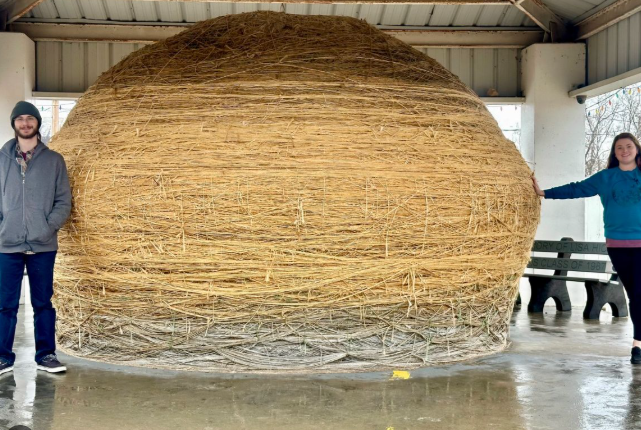
Located in Cawker City, Kansas, the World’s Largest Ball of Twine is a classic American roadside attraction.
This giant rope ball was started in 1953 by local resident Frank Stoeber. Initially, he simply wound discarded rope into a ball, but the project gradually evolved into a community activity.
As more and more people joined in, the rope ball continued to grow in size, becoming the town’s most recognizable tourist attraction.
Unlike grand historical monuments, the attraction’s appeal lies in its simple yet unique creativity. Ordinary agricultural materials, accumulated over a long period, have become a giant display that attracts out-of-town visitors.
The city of Cork also hosts related community events around the rope ball, making it part of the local road trip culture.
4. Salvation Mountain: A Colorful Art Mountain in the California Desert
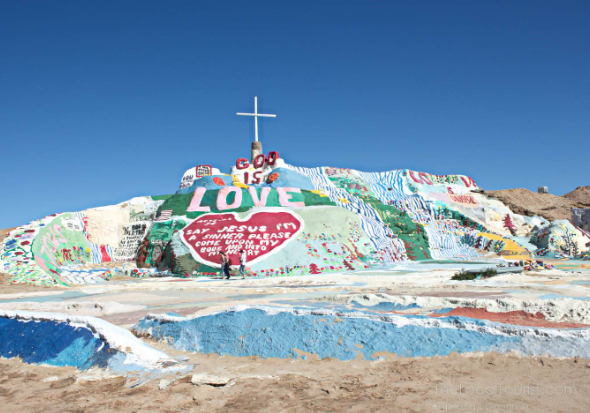
Salvation Mountain is located near Niland, California, close to the Salton Sea.
This large-scale outdoor art installation, created over a long period by Leonard Knight, is constructed using adobe, straw, and abundant paint. The surface is covered with vibrant colors, religious text, floral patterns, and mountain landscapes.
From a distance, the entire mountain resembles a giant three-dimensional colorful painting. Upon closer inspection, visitors can observe the handcrafted decorations in different areas and the traces of repeated repairs by the artist.
Salvation Mountain is also one of the representative attractions of American Folk Art. It doesn’t employ traditional monument design methods, but rather expresses religious beliefs and artistic ideals through personal creation.
Because the artwork is located in a desert environment, the materials are easily affected by the weather; therefore, it’s advisable to check the site’s maintenance status and opening hours before visiting.
The characteristic of American roadside attractions lies in their diversity. They might be a row of cars buried in the ground, a giant statue of a historical figure, an ever-growing ball of rope, or an independently created art installation in the desert.
For tourists planning a road trip in the United States, in addition to focusing on national parks and major city attractions, these unique stops along the way are also worth considering. They often make an ordinary road trip more interesting, while providing opportunities to learn about American local history, folk art, and road trip culture.