Italy combines ancient cities, Renaissance art, Mediterranean coastlines, mountain landscapes, famous cuisine, and hundreds of historic towns within a relatively compact country. A single trip might include Roman ruins, Tuscan countryside, Venetian canals, Alpine scenery, and beaches along the southern coast.
This Italy Travel Guide covers the essentials for planning a first trip, including where to go, when to visit, how to travel between cities, what to eat, and how to build an itinerary without trying to see too much at once.
Best Places to Visit in Italy
Italy offers very different experiences from north to south, so the best destinations depend on your interests.
Rome is the natural starting point for travelers interested in ancient history. The Colosseum, Roman Forum, Pantheon, historic center, and Vatican City make it possible to spend several days exploring without running out of major sights.
Florence is one of the country’s most important destinations for Renaissance art and architecture. Its historic center includes the Cathedral of Santa Maria del Fiore, Piazza della Signoria, Ponte Vecchio, and internationally known museums.
Venice offers an entirely different environment of canals, bridges, narrow streets, historic palaces, and lagoon islands.
Milan is better suited to travelers interested in fashion, contemporary urban culture, shopping, design, and landmarks such as Milan Cathedral.
Beyond the major cities, destinations such as Naples, Bologna, Verona, Turin, Palermo, and Matera provide very different regional experiences.
Explore Tuscany
Tuscany is one of Italy’s most recognizable regions.
Florence is its cultural center, but much of Tuscany’s appeal lies outside the city.
Siena is known for its medieval streets and Piazza del Campo, while towns such as San Gimignano and Pienza provide smaller-scale historic environments.
The countryside around Val d’Orcia is characterized by rolling hills, vineyards, cypress trees, farmhouses, and historic villages. Val d’Orcia itself is recognized as a UNESCO World Heritage Site.
Travelers with more time can combine Florence with several days exploring smaller Tuscan towns rather than treating the region only as a day trip.
Visit the Amalfi Coast
Southern Italy offers some of the country’s most dramatic coastal scenery.
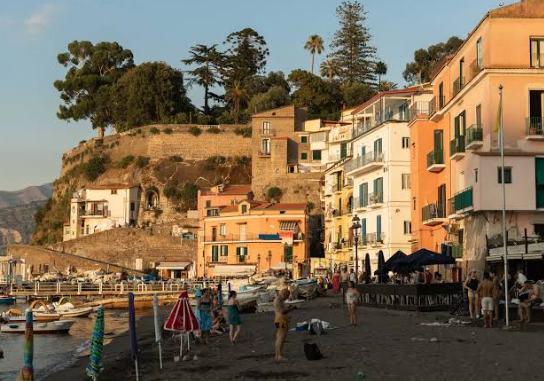
The Amalfi Coast stretches along steep Mediterranean slopes dotted with settlements such as Positano, Amalfi, and Ravello.
The landscape is known for cliffside villages, terraced cultivation, winding coastal roads, and views across the Tyrrhenian Sea. The Costiera Amalfitana has been listed as a UNESCO World Heritage property since 1997.
Nearby Sorrento is often used as a base for exploring the region, while Capri can be reached by ferry.
The archaeological sites of Pompeii and Herculaneum also make excellent additions to a trip around Naples and the surrounding coast.
Discover Sicily and Sardinia
Travelers looking for longer coastal trips should consider Italy’s two largest islands.
Sicily combines beaches with ancient Greek and Roman sites, Baroque towns, volcanic landscapes, and distinctive regional cuisine.
Palermo, Catania, Syracuse, Taormina, and the Valley of the Temples near Agrigento are among the island’s best-known destinations.
Mount Etna is also recognized by UNESCO for its geological significance.
Sardinia offers a different experience, with clear coastal waters, rugged landscapes, archaeological sites, and smaller seaside communities.
Both islands deserve several days rather than being added briefly to an already crowded itinerary.
See the Italian Lakes
Northern Italy’s lakes offer a quieter alternative to the major cities.
Lake Como is the most internationally famous, with historic villas, mountain scenery, and towns such as Bellagio and Varenna.
Lake Garda is larger and provides a mix of lakeside towns, outdoor activities, and mountain landscapes.
Other options include Lake Maggiore and smaller lakes across northern Italy.
The lake region works particularly well when combined with Milan, Verona, or the Alps.
Explore the Dolomites
Travelers interested in hiking and mountain scenery should consider the Dolomites in northeastern Italy.
The region is known for dramatic limestone peaks, valleys, alpine villages, hiking routes, and winter sports.
UNESCO recognizes the Dolomites as a natural World Heritage property for their distinctive mountain landscapes and geological importance.
Summer is popular for hiking, while winter attracts skiers and snowboarders.
The mountains also provide a very different image of Italy from the Mediterranean landscapes commonly associated with the country.
Best Time to Visit Italy
There is no single best month for every traveler because Italy’s climate varies considerably between the Alps and the southern Mediterranean.
Spring is a good choice for sightseeing because temperatures are generally comfortable and landscapes are green.
Summer offers long days and excellent conditions for coastal holidays, but major cities and beach destinations can be busy.
Autumn is particularly attractive for travelers interested in food, wine regions, and city sightseeing.
Winter is quieter in many destinations and works especially well for museums, historic cities, Christmas markets, and skiing in northern mountain regions.
Your ideal season therefore depends on whether the trip focuses on cities, beaches, countryside, or mountains.
How to Travel Around Italy
Italy’s rail network makes train travel one of the easiest ways to move between major cities.
Official Italian tourism information notes that high-speed services connect major destinations and that Milan to Rome can take just over three hours. Trenitalia and Italo operate hundreds of daily connections across the country.
Routes such as Rome–Florence, Florence–Bologna, Bologna–Milan, and Florence–Venice are particularly convenient by rail.
Cars are more useful when exploring rural areas such as Tuscany, parts of Puglia, mountain regions, or smaller villages that have limited rail access.
For Sicily, Sardinia, and some distant regions, domestic flights can save time. Italy has around 40 airports offering domestic and international connections, with Rome Fiumicino and Milan Malpensa among the principal international gateways.
What to Eat in Italy
Italian food changes significantly between regions.
In Rome, traditional dishes include carbonara, amatriciana, and cacio e pepe.
Naples is closely associated with pizza, while Bologna and the surrounding Emilia-Romagna region are famous for fresh pasta, ragù, Parmigiano Reggiano, and other regional specialties.
Tuscany is known for simple dishes based on bread, beans, meat, olive oil, and seasonal ingredients.
Sicilian cuisine reflects Mediterranean influences and includes seafood, arancini, cannoli, and pasta dishes.
Rather than looking only for universally famous Italian foods, try dishes associated with the specific region you are visiting.
How Many Days Do You Need in Italy?
A week is enough for a focused first visit, but trying to cross the entire country in seven days usually creates too much travel.
A practical one-week trip could combine Rome, Florence, and Venice.
With ten days, travelers might add Tuscany, Bologna, Naples, or another nearby region.
Two weeks allows more flexibility and makes it easier to include coastal areas or smaller towns.
For a first trip, spending two or three nights in each major destination usually provides a more enjoyable experience than changing hotels every day.
Italy’s Historic and Cultural Heritage
Italy has an extraordinary concentration of cultural landmarks.
As of 2026, UNESCO lists 62 World Heritage properties in Italy, including the historic centers of Rome, Florence, Naples, Siena, and San Gimignano, as well as Venice and its Lagoon, Pompeii, the Amalfi Coast, the Dolomites, Mount Etna, and the Trulli of Alberobello.
This means historical sites are not limited to Italy’s most famous cities.
Smaller destinations such as Matera, Ravenna, Urbino, Modena, and Alberobello can be equally rewarding for travelers interested in architecture, archaeology, and cultural history.
Practical Italy Travel Tips
Avoid trying to fit too many regions into one trip. Italy may look compact on a map, but frequent hotel changes can consume a large part of your vacation.
Book major attractions in advance when visiting popular cities, especially during peak travel periods.
Comfortable walking shoes are essential because historic centers often include cobblestone streets, stairs, and large pedestrian areas.
Use trains between major cities and consider renting a car only when exploring countryside or destinations where public transportation is less convenient.
Most importantly, leave some unscheduled time. Italian cities and towns are often best experienced slowly, whether that means stopping at a café, exploring a neighborhood away from the main landmarks, or spending an evening walking through a historic center.
Planning Your First Trip to Italy
A successful Italy Travel Guide does not need to include every famous destination in a single itinerary.
First-time visitors can begin with Rome, Florence, and Venice for a classic introduction to Italian history, art, and architecture. Travelers with additional time can expand into Tuscany, the Amalfi Coast, the Italian lakes, the Dolomites, Sicily, Sardinia, or Puglia.
The greatest strength of traveling in Italy is its variety. Ancient ruins, Renaissance cities, mountain villages, vineyards, beaches, islands, and regional cuisines can all form completely different trips.
Rather than rushing through the country, choose a few regions that match your interests and give yourself enough time to experience each one properly.